After multiple companies have used a controversial bankruptcy strategy to evade mesothelioma and asbestos liability claims, victims affected by the maneuver have asked the Supreme Court to weigh in. The Texas Two-step court has seen companies separate their asbestos liabilities into newly created entities, and then request bankruptcy protection for the new company despite the parent being admittedly solvent. If the court accepts the case, it could have profound implications for tens of thousands of asbestos victims seeking compensation.
Mesothelioma Victims Challenge Georgia-Pacific Subsidiary’s Bankruptcy Filing
Though multiple companies have pursued the strategy, mesothelioma claimants are specifically petitioning the court over actions by Georgia-Pacific. The well-known building and paper products manufacturer has faced tens of thousands of asbestos-related personal injury claims over the past several decades, and in 2017, implemented a divisional merger under Texas state law that separated its asbestos liabilities into a newly created entity—Bestwall LLC. The move left the bulk of operating business and assets with the “new GP,” while Bestwall filed for Chapter 11 protection in the U.S. District Court for the Western District of North Carolina.
The use of this strategy was designed to save Georgia-Pacific from having to pay individual current and future mesothelioma and asbestos claims, and instead to minimize the required payout through bankruptcy. An Official Committee of Asbestos Claimants representing victims has actively opposed the effort, repeatedly arguing that the filing was undertaken in bad faith, that Bestwall was not financially distressed despite facing thousands of mesothelioma claims, and that the bankruptcy court lacked jurisdiction.
Mesothelioma Victims Accuse Bestwall and Georgia-Pacific of Bad Faith Action
In August 2025, the U.S. Court of Appeals for the Fourth Circuit rejected the mesothelioma committee’s challenges, holding that a petition filed under the Bankruptcy Code is a case “arising under” federal law regardless of whether the debtor is insolvent or unable to pay its debts. Though one judge dissented, pointing to the historical understanding that bankruptcy is a remedy for financial failure, the majority agreed that there is nothing in the Constitution’s Bankruptcy Clause that imposes an insolvency requirement. They also said that the debtor’s financial condition could be relevant to plan confirmation or dismissal for bad faith, as asserted by the victims.
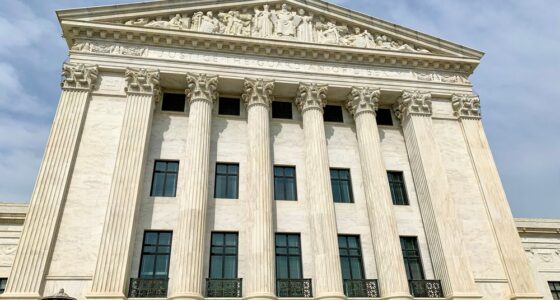
Now, the mesothelioma and asbestos claimants have asked the Supreme Court to review the lower court’s decision, arguing that it permits solvent enterprises to use bankruptcy in ways that upset traditional debtor-creditor balances and protect non-debtors from tort liability. While Bestwall argues that Congress authorized debtors to use the bankruptcy process to address claims, the victims’ petition has attracted substantial support, including from a bipartisan group of senators who recently proposed legislation to prevent the Texas Two-Step from being used.
If you or someone you love has been diagnosed with mesothelioma or another asbestos-related disease, the Patient Advocates at Mesothelioma.net can help. Contact us today at 1-800-692-8608 to learn more.
