


Immune checkpoint inhibitors are a type of immunotherapy that has changed the way doctors treat mesothelioma. These drugs work by helping the immune system recognize and attack cancer cells that would otherwise go undetected. For patients with pleural mesothelioma that cannot be removed with surgery, immune checkpoint inhibitors have become a standard first-line treatment option — and clinical research shows they are making a real difference in how long patients live.
What Are Immune Checkpoint Inhibitors?
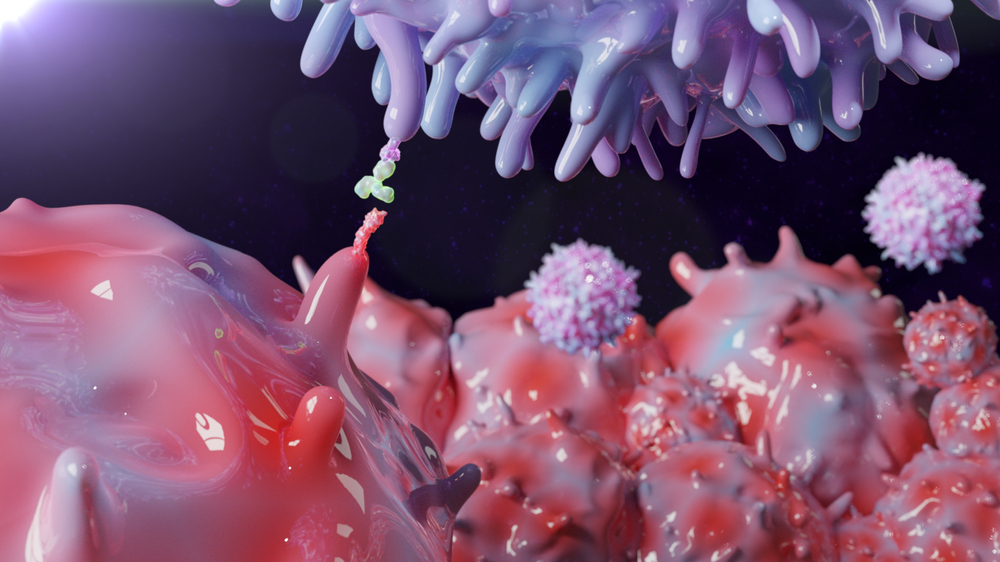
Your immune system is designed to find and destroy harmful cells — including cancer. But cancer is clever. Mesothelioma cells can send out signals that essentially tell your immune system, “Don’t attack me. I’m normal.” These signals work through special pathways called immune checkpoints.[1]
Immune checkpoint inhibitors are drugs that block those signals. When the “leave me alone” message is blocked, your immune system’s T cells — the frontline fighters — are free to recognize mesothelioma cells as the threat they are, and attack them. In short, these drugs allow your own immune system to be the cancer-fighting tool it is meant to be.
There are several immune checkpoint inhibitors that have been approved by the U.S. Food and Drug Administration (FDA) for use in treating mesothelioma. The most widely used include:[2]
- Opdivo® (nivolumab) — targets a checkpoint protein called PD-1
- Yervoy® (ipilimumab) — targets a different checkpoint protein called CTLA-4
- Keytruda® (pembrolizumab) — also targets PD-1
Opdivo and Yervoy are approved together as a combination treatment. Keytruda is approved in combination with the chemotherapy drugs pemetrexed and platinum. These are currently the only immune checkpoint inhibitors approved specifically for inoperable pleural mesothelioma.
How Do Immune Checkpoint Inhibitors Work for Mesothelioma?
To understand how these drugs work, it helps to picture the immune system as a highly trained security force. T cells are the officers — always on patrol, looking for threats. But they also follow strict rules to prevent them from attacking healthy tissue. Those rules are enforced by checkpoint proteins.[]
One of the most important checkpoints is called the PD-1/PD-L1 pathway. Here’s how it works:[1]
- Healthy cells display a protein called PD-L1 on their surface.
- T cells have a matching protein called PD-1, which acts like a receptor.
- When PD-L1 and PD-1 connect — like a handshake — the T cell receives a signal to stand down and not attack.
Mesothelioma cells exploit this system. They display PD-L1 too, tricking T cells into thinking they are harmless. Immune checkpoint inhibitors block that handshake from happening. Without the “stand down” signal, T cells stay active and are free to attack mesothelioma cells.
A second checkpoint, CTLA-4, works earlier in the immune response. Yervoy blocks CTLA-4, which helps activate T cells before they even reach the tumor. When Opdivo and Yervoy are used together, they block two different checkpoints at the same time — giving the immune system a stronger and more coordinated response.[1]
Which Mesothelioma Patients Are Eligible for Checkpoint Inhibitor Therapy?
Checkpoint inhibitor therapy is not right for every mesothelioma patient. In general, eligibility depends on several factors, including overall health, cell type, and whether surgery is an option.
Patients who are most likely to be eligible for immune checkpoint inhibitors include those who:[2]
- Have pleural mesothelioma that cannot be removed with surgery (often Stage 3 or Stage 4)
- Are in good overall health — doctors often use a scale called ECOG 0-1 to measure this
- Do not have active autoimmune diseases, which can make immune-activating drugs risky
- Have not previously received immunotherapy
The mesothelioma cell type also matters. Patients with epithelioid mesothelioma — the most common cell type — often respond well to checkpoint inhibitors. Patients with sarcomatoid mesothelioma, a more aggressive and harder-to-treat form, can also benefit. In some cases, checkpoint inhibitors have been shown to double survival for patients with the sarcomatoid cell type, which typically responds poorly to chemotherapy.
Checkpoint inhibitors may also be used off-label for peritoneal mesothelioma (mesothelioma of the abdomen). Research is ongoing to understand their effectiveness in that setting.
What Does the Research Show?
Multiple large clinical trials have confirmed that immune checkpoint inhibitors improve survival for mesothelioma patients. Here’s what the most significant trials have found:
CheckMate 743 Trial — Opdivo + Yervoy vs. Chemotherapy
This landmark trial compared the combination of Opdivo and Yervoy to standard chemotherapy in patients with inoperable pleural mesothelioma. The results were significant:
- Patients on Opdivo and Yervoy had a median overall survival of 18.1 months, compared to 14.1 months with chemotherapy alone.
- Two-year survival was 41% for patients on immunotherapy, versus 27% for chemotherapy.
- Three-year survival was 23% on immunotherapy, compared to 15% with chemotherapy.
These results led to the FDA approval of Opdivo plus Yervoy as a first-line treatment for unresectable pleural mesothelioma.
KEYNOTE-483 Trial — Keytruda + Chemotherapy
This trial tested Keytruda combined with chemotherapy against chemotherapy alone. Key findings included:
- A 21% reduction in the risk of death for patients receiving Keytruda plus chemotherapy.
- A tumor response rate of 62%, compared to 38% with chemotherapy alone.
What a Broader Analysis Confirms
A 2025 systematic review and analysis of three major randomized controlled trials — CheckMate 743, KEYNOTE-483, and BEAT-Meso — looked at data from more than 1,400 mesothelioma patients. The findings reinforced what the individual trials had shown: patients who received immune checkpoint inhibitors as part of their first-line treatment lived significantly longer and had longer periods without disease progression than those who received chemotherapy alone.[2]
Importantly, benefits in overall survival were most clear for patients with non-epithelioid (sarcomatoid or biphasic) mesothelioma. For patients with the epithelioid cell type specifically, the survival benefit was present but less statistically pronounced — highlighting the importance of individualized treatment planning based on cell type.
How Are Checkpoint Inhibitors Administered?
Immune checkpoint inhibitors are given intravenously (IV) — meaning they are delivered directly into the bloodstream through an infusion. The specific schedule depends on which drugs are used.
For the Opdivo and Yervoy combination, treatment typically follows a repeating cycle:[2]
- First infusion: Opdivo is administered over about 30 minutes, followed immediately by Yervoy over another 30 minutes.
- Three weeks later: A second Opdivo infusion is given (no Yervoy at this visit).
- Three weeks after that: Both Opdivo and Yervoy are given again, as in the first infusion.
- Three weeks later: Opdivo alone is administered again.
This four-infusion cycle can then be repeated. Treatment may continue for up to two years, as long as it remains safe and effective for that patient. In clinical trials, about half of mesothelioma patients received at least six months of checkpoint inhibitor therapy.
Some patients receive checkpoint inhibitors alongside chemotherapy as part of a multimodal treatment plan. Your care team will determine the right schedule and combination for your individual situation.
Side Effects of Immune Checkpoint Inhibitors for Mesothelioma
Because immune checkpoint inhibitors work by turning up the immune system, they can sometimes cause the immune system to attack healthy tissues. These are called immune-related side effects. The nature and severity of side effects can vary widely from person to person.
Common Side Effects
The most frequently reported side effects of immune checkpoint inhibitors include:[1]
- Fatigue
- Rash or skin itching
- Diarrhea
- Nausea
- Cough
Serious But Rare Side Effects
In some cases, immune checkpoint inhibitors can cause more serious inflammation in specific organs. These reactions are less common but require prompt medical attention. They include:
- Pneumonitis — inflammation of the lungs, which can cause cough and shortness of breath
- Colitis — inflammation of the bowel, which can cause abdominal pain and diarrhea
- Hepatitis — inflammation of the liver
- Endocrinopathies — problems with hormone-producing glands, such as the thyroid or adrenal glands
Many of these serious side effects can be managed or reversed with early treatment, including corticosteroids. However, they can cause lasting damage if left untreated. Patients should report any new or worsening symptoms to their medical team right away.
Many patients report tolerating immune checkpoint inhibitors better than chemotherapy overall. Unlike with chemotherapy, which can cause hair loss, severe nausea, and bone marrow suppression, checkpoint inhibitors produce a different profile of side effects. That said, every patient’s experience is different, and your doctor is the best person to discuss what to expect.
Checkpoint Inhibitors in Clinical Trials
Research into immune checkpoint inhibitors for mesothelioma is ongoing. Clinical trials are currently exploring new drug combinations, expanded uses, and earlier-stage treatment approaches. Some of the active trials include:
- DREAM3R Trial (NCT04334759): A Phase III trial testing durvalumab (Imfinzi) plus chemotherapy for pleural mesothelioma that cannot be removed with surgery.
- NEMO Trial (NCT05932199): Testing durvalumab and tremelimumab (Imjudo) as treatment before and after surgery for pleural mesothelioma.
- Opdivo + Yervoy for Peritoneal Mesothelioma (NCT05041062): A Phase II trial studying checkpoint inhibitors before and after surgery for mesothelioma of the abdomen.
- Pembrolizumab + Radiation (NCT04897022): Testing the combination of Keytruda and targeted radiation therapy for inoperable mesothelioma.
Clinical trials give patients access to promising new therapies before they are widely available. Ask your mesothelioma specialist whether any open trials might be right for you.
Emerging Treatments: YAP/TEAD Inhibitors
Beyond standard immune checkpoint inhibitors, researchers are exploring a new class of targeted therapies called YAP/TEAD inhibitors. One promising example is VT3989, which targets a molecular pathway that plays a role in mesothelioma tumor growth.
Early research suggests that VT3989 and similar agents may help shrink tumors in some mesothelioma patients, particularly those who have not responded to other treatments. While these therapies are still in clinical development, they represent a hopeful next chapter in mesothelioma treatment research.
Frequently Asked Questions About Checkpoint Inhibitors and Mesothelioma
Are checkpoint inhibitors the same as chemotherapy?
No. Chemotherapy drugs kill cancer cells directly, but they also affect healthy fast-growing cells throughout the body — which is why they cause side effects like hair loss and nausea. Checkpoint inhibitors work differently: they activate your immune system so it can do the fighting. The side effects are also different, though both types of treatment carry risks.
Can checkpoint inhibitors cure mesothelioma?
Currently, there is no known cure for mesothelioma. Checkpoint inhibitors can extend survival and, in some cases, significantly shrink tumors — but the goal is typically to control the disease and improve quality of life for as long as possible. Some patients have experienced durable responses to immunotherapy, meaning the treatment has kept their cancer stable for extended periods.
What is the typical survival with checkpoint inhibitor treatment?
For mesothelioma patients treated with immune checkpoint inhibitors, median survival is approximately 18 months, compared to around 14 months with chemotherapy alone. Individual outcomes vary based on factors including cell type, disease stage, and overall health.
What if checkpoint inhibitors stop working?
If a patient’s mesothelioma stops responding to checkpoint inhibitor therapy, doctors may explore other treatment options, including chemotherapy, clinical trials, or other emerging therapies. Your oncologist can help determine the best path forward based on your individual situation.
If you or a loved one has been diagnosed with mesothelioma, our Patient Advocates are here to help. Call us at 1-800-692-8608 to learn more about treatment options, find a specialist near you, or get connected with resources to support your journey.
Learn More with Our YouTube Videos
References
View All References